Objective 1
Produce a concept of operations, informed by industry and vetted with the FAA, that identifies needs and enabling technologies for the integration of emerging UAS cargo operations into the NAS
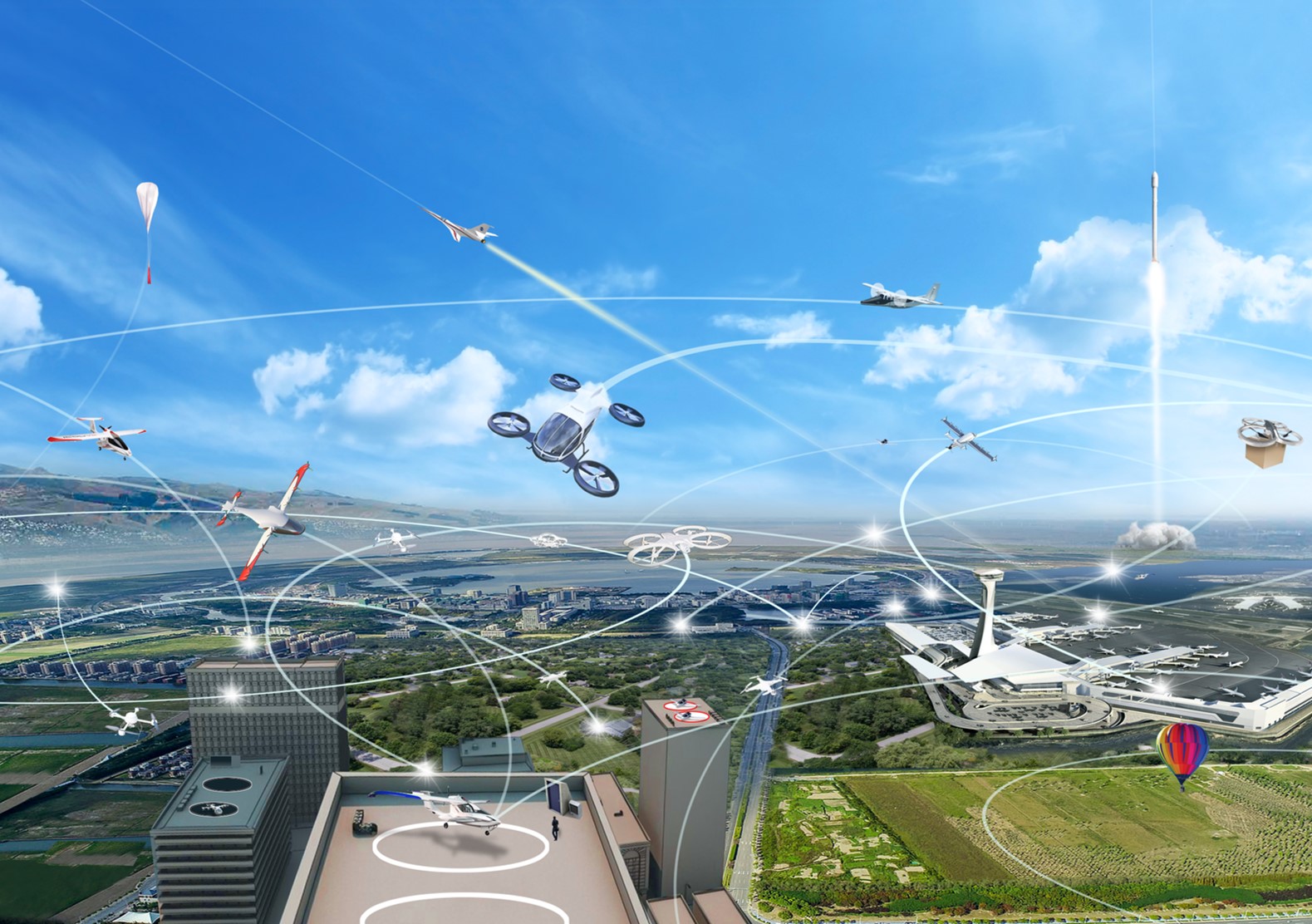
Increasingly autonomous air vehicles will revolutionize aviation in the not-too-distant future – including how goods are moved across the United States. Through automation, regional cargo flights are envisioned with no pilots on board, thereby reducing operating costs and opening new markets where goods are delivered closer to their destination by air. But before air vehicles can routinely take to the skies, they must seamlessly integrate into the world’s busiest and most complex airspace, the U.S National Airspace System (NAS).
NASA has completed significant research needed to enable Unmanned Aircraft System (UAS) operations which will be leveraged by the Pathfinding for Airspace with Autonomous Vehicles (PAAV) subproject.
PAAV will initially focus on the seamless and scalable integration of large Unmanned Aerial Vehicles (UAV) for cargo transportation. These vehicles will fly in the same airspace as commercial aircraft, with pilots outside of the vehicle. Initial operations, while requiring interactions between pilots and air-traffic controllers, will avoid complex airspace in the vicinity of major airports. Increasingly autonomous operations will enable large amounts of air cargo to be transported regionally or nationally with greater speed and efficiency than is possible today.
Produce a concept of operations, informed by industry and vetted with the FAA, that identifies needs and enabling technologies for the integration of emerging UAS cargo operations into the NAS
Identify system requirements and/or standards which address major barriers to routine file-and-fly UAS cargo operations
Identify increasingly automated functions needed for robust and scalable UAS cargo operations and examine necessary changes to existing roles and responsibilities between humans and automation
Test and validate selected procedures and/or technologies in flight
Accelerate U.S. leadership and industry growth for increasingly autonomous cargo operations in the NAS
Reduce the current barriers for limited idiosyncratic operations by enabling scalable “file-and-fly” operations with increasingly autonomous regional aircraft
Validate airspace integration through demonstration of procedures and technologies that leverage automation and autonomy capabilities
The first objective is the development of a detailed and FAA-vetted ConOps that defines a near-term set of qualitative and quantitative system characteristics, processes, and procedures that would enable limited operations of remotely piloted aircraft, demonstrating a pathway to their initial introduction into the NAS. This ConOps will be further developed to describe a mid-term set of solutions and characteristics enabling full and seamless integration of remotely piloted vehicles into the NAS.
The second objective is the development and execution of part-task and full-mission simulations that will validate the requirements and procedures used to enable emerging ATM and UAS technologies.
The third objective is focused on evaluating how automation and autonomy may help facilitate the seamless integration of scalable UAS cargo operations. Potential use cases for autonomy include resilient lost link operations, integration into visual flight rules (VFR) traffic patterns at airports without operating control towers, and remaining well clear of other air traffic, among other use cases. There is a need to evaluate the autonomy needed for scalable UAS operations, how that autonomy integrates with the current NAS, and changes to existing roles and responsibilities between the remote pilot, ATC, and automation.
The fourth objective is focused on forming partnerships with UAS industry leaders to jointly conduct at least one flight demonstration of critical elements of the near-term ConOps. The flight demonstration will provide validation of the ConOps and associated research.
These objectives and supporting activities are clearly in line with NASA’s Strategic Objective 3.2: “Transition aviation through revolutionary technology research, development, and transfer.” More importantly, they clearly support NASA Performance Goal 3.2.6: “Support transformation of civil aircraft operations and air traffic management through the development, application, and validation of advanced autonomy and automation technologies, including addressing critical barriers to enabling urban on-demand mobility and Unmanned Aircraft Systems (UAS) operations in low-altitude airspace.”